
How to Keep Your Home Clean While Staying Eco-Friendly
Keeping your home clean is important for comfort, health, and overall well-being. However, many traditional cleaning products contain harsh chemicals that may harm the environment, pollute indoor air, and create unnecessary waste. As awareness about environmental protection grows, more people are looking for ways to maintain a clean home while reducing their environmental impact.

Eco-friendly cleaning focuses on using natural products, reducing waste, conserving water, and choosing sustainable cleaning habits. These methods help maintain cleanliness without harming the planet. The good news is that eco-friendly cleaning is not only better for the environment but can also save money and improve indoor air quality.
This guide explains practical and simple ways to keep your home clean while staying environmentally responsible.
Understanding Eco-Friendly Cleaning
Eco-friendly cleaning means using methods and products that are safe for both people and the environment. Instead of relying on chemical-based cleaners, eco-friendly cleaning focuses on natural ingredients and sustainable practices.
Key Principles of Eco-Friendly Cleaning
| Principle | Description |
|---|---|
| Natural ingredients | Use non-toxic cleaning products |
| Waste reduction | Minimize disposable materials |
| Water conservation | Use water responsibly |
| Sustainable choices | Choose reusable and biodegradable products |
| Energy efficiency | Reduce energy consumption while cleaning |
Following these principles helps maintain a healthier home and environment.
Use Natural Cleaning Ingredients
Many effective cleaning solutions can be made using simple natural ingredients that are already available in most homes.
Common Natural Cleaning Ingredients
| Ingredient | Cleaning Purpose |
|---|---|
| Vinegar | Removes stains and disinfects surfaces |
| Baking soda | Eliminates odors and cleans surfaces |
| Lemon | Breaks down grease and freshens air |
| Salt | Removes stains and absorbs moisture |
| Castile soap | Gentle natural cleaning soap |
These ingredients are inexpensive, safe, and environmentally friendly.
Make Your Own Eco-Friendly Cleaning Solutions
Homemade cleaners are easy to prepare and reduce the need for commercial chemical products.
All-Purpose Natural Cleaner
| Ingredient | Quantity |
|---|---|
| White vinegar | 1 cup |
| Water | 1 cup |
| Lemon juice | 1 tablespoon |
| Spray bottle | 1 |
How to Use
- Mix all ingredients in a spray bottle.
- Shake gently before use.
- Spray on surfaces such as counters, sinks, and tables.
- Wipe clean with a cloth.
This solution works well for general household cleaning.
Reduce Disposable Cleaning Products
Many cleaning products such as paper towels, disposable wipes, and single-use cloths create unnecessary waste.
Eco-friendly alternatives include:
- Reusable microfiber cloths
- Washable cleaning towels
- Refillable spray bottles
- Reusable mop pads
Comparison of Disposable vs Reusable Cleaning Items
| Item Type | Disposable Option | Eco-Friendly Alternative |
|---|---|---|
| Cleaning wipes | Disposable wipes | Washable cloths |
| Paper towels | Single-use paper | Reusable towels |
| Mop pads | Disposable pads | Washable mop heads |
| Cleaning bottles | Single-use bottles | Refillable containers |
Using reusable items reduces waste and saves money over time.
Improve Indoor Air Quality Naturally
Many chemical cleaning products release fumes that can affect indoor air quality. Eco-friendly cleaning methods help maintain cleaner air inside the home.
Natural Ways to Improve Air Quality
- Open windows regularly for ventilation
- Use indoor plants to absorb pollutants
- Avoid synthetic air fresheners
- Use natural scents like lemon or essential oils
Improving indoor air quality creates a healthier living environment.
Conserve Water While Cleaning
Water conservation is another important part of eco-friendly cleaning. Many traditional cleaning habits use more water than necessary.
Water-Saving Cleaning Tips
| Tip | Benefit |
|---|---|
| Use buckets instead of running water | Reduces water waste |
| Turn off taps when not needed | Conserves water |
| Use efficient mops and cloths | Requires less water |
| Spot-clean stains instead of washing entire areas | Saves time and water |
These simple adjustments help protect natural resources.
Choose Eco-Friendly Cleaning Tools
Sustainable cleaning tools are designed to last longer and produce less waste.
Examples of Eco-Friendly Tools
| Tool | Eco-Friendly Feature |
|---|---|
| Bamboo brushes | Biodegradable material |
| Microfiber cloths | Reusable and durable |
| Natural fiber scrubbers | Compostable materials |
| Refillable spray bottles | Reduces plastic waste |
Choosing durable tools reduces the need for frequent replacements.
Reduce Plastic Waste in Cleaning
Plastic packaging is a major environmental concern. Many cleaning products are sold in single-use plastic containers.
Ways to reduce plastic waste include:
- Buying concentrated cleaning solutions
- Using refill stations when available
- Purchasing products in recyclable packaging
- Reusing old containers for homemade cleaners
Reducing plastic waste helps protect the environment and lowers pollution.
Maintain a Daily Cleaning Routine
Keeping a home clean becomes easier when small tasks are done regularly.
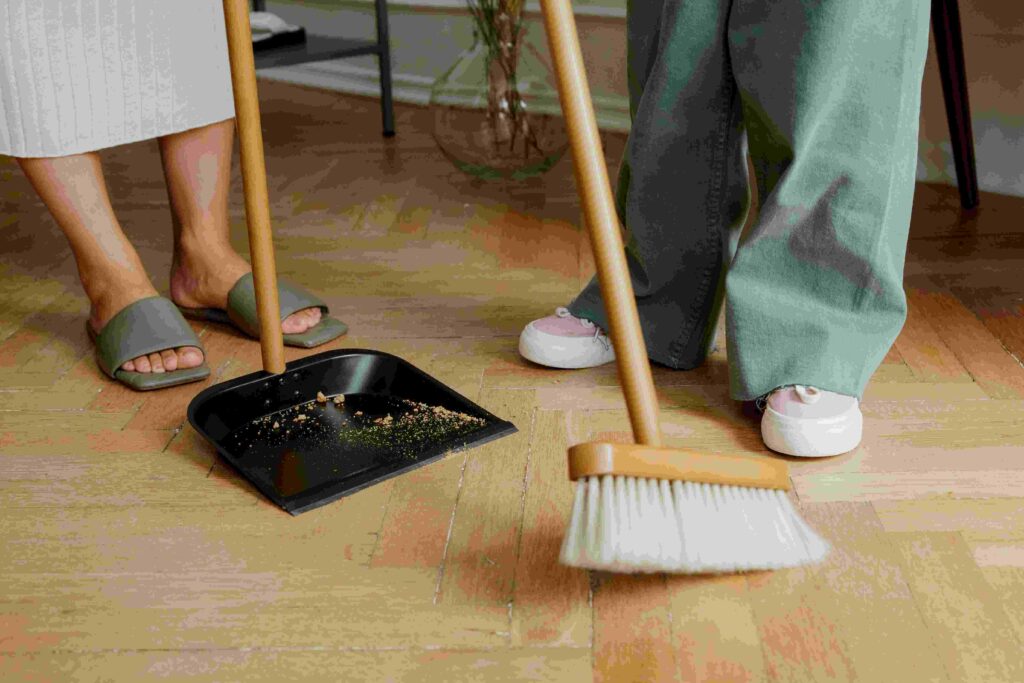
Simple Daily Eco-Friendly Cleaning Routine
| Task | Time Required |
|---|---|
| Wipe kitchen counters | 5 minutes |
| Sweep or vacuum floors | 5–10 minutes |
| Clean bathroom surfaces | 5 minutes |
| Organize clutter | 5 minutes |
Daily cleaning reduces the need for heavy cleaning sessions that may require stronger chemicals.
Use Energy-Efficient Cleaning Methods
Energy use also plays a role in eco-friendly home cleaning.
Energy-Saving Cleaning Tips
- Wash clothes in cold water when possible
- Run full loads in dishwashers and washing machines
- Air-dry clothes instead of using dryers
- Use energy-efficient appliances
These habits reduce electricity consumption and support sustainability.
Choose Environmentally Friendly Cleaning Products
If you prefer store-bought products, look for brands that focus on sustainability.
Features of Eco-Friendly Cleaning Products
| Feature | Benefit |
|---|---|
| Biodegradable ingredients | Break down safely in nature |
| Non-toxic formulas | Safer for families and pets |
| Recyclable packaging | Reduces waste |
| Plant-based ingredients | Environmentally friendly |
Selecting responsible brands supports companies that prioritize environmental protection.
Encourage Eco-Friendly Habits in the Household
Eco-friendly cleaning becomes easier when everyone in the home participates.
Examples include:
- Teaching children to clean responsibly
- Encouraging recycling habits
- Reducing unnecessary product use
- Keeping cleaning tools organized for easy access
Small habits practiced daily create long-term environmental benefits.
Summary of Eco-Friendly Cleaning Practices
| Practice | Environmental Benefit |
|---|---|
| Using natural ingredients | Reduces chemical pollution |
| Homemade cleaners | Saves money and reduces waste |
| Reusable cleaning tools | Decreases disposable waste |
| Water conservation | Protects natural resources |
| Energy-efficient cleaning | Reduces energy consumption |
| Reduced plastic use | Lowers environmental pollution |
| Natural air freshening | Improves indoor air quality |
Maintaining a clean home while staying eco-friendly is both practical and rewarding. By choosing natural cleaning methods, reducing waste, conserving resources, and using sustainable products, it is possible to create a healthier living environment while also protecting the planet for future generations.
Read More Like This: Bathroom Mold Removal Tips That Actually Work
Conclusion
Keeping your home clean while staying eco-friendly is achievable with simple and thoughtful choices. By using natural ingredients, reducing disposable cleaning products, conserving water, and choosing reusable tools, you can maintain a clean and healthy living environment without harming the planet. Small changes such as making homemade cleaners, improving ventilation, and reducing plastic waste also contribute to a more sustainable lifestyle.
Over time, these eco-friendly habits not only protect the environment but also save money and improve indoor air quality. By practicing responsible cleaning methods every day, homeowners can create a clean, safe, and environmentally friendly home that supports both personal well-being and the health of the planet.
Frequently Asked Questions (FAQs)
Q1: What does eco-friendly cleaning mean?
Eco-friendly cleaning means using natural, non-toxic products and sustainable methods that are safe for people, pets, and the environment.
Q2: Are natural cleaning ingredients effective for home cleaning?
Yes, natural ingredients like vinegar, baking soda, lemon, and castile soap can effectively remove stains, grease, and odors.
Q3: How can I reduce waste while cleaning my home?
You can reduce waste by using reusable cloths, refillable bottles, washable mop pads, and avoiding disposable wipes and paper towels.
Q4: Are eco-friendly cleaning products safe for children and pets?
Most eco-friendly products are non-toxic and safer compared to chemical cleaners, making them a better choice for households with children and pets.
Q5: How can I improve indoor air quality while cleaning?
Open windows for ventilation, avoid chemical sprays, and use natural scents like lemon or essential oils to keep the air fresh.
Q6: Can eco-friendly cleaning help save money?
Yes, using simple household ingredients and reusable cleaning tools can reduce the cost of buying expensive commercial cleaning products.
Q7: What are the best reusable cleaning tools?
Microfiber cloths, bamboo brushes, washable mop pads, and refillable spray bottles are great eco-friendly cleaning tools.
Q8: How can I make eco-friendly cleaning a daily habit?
Start with small steps such as using natural cleaners, reducing plastic waste, conserving water, and following a simple daily cleaning routine.
For More Tips Visit Our Website: Jinty.space